
The traditional costumes of Cyprus reflect the daily life, craftsmanship, and cultural heritage of the island. Developed over centuries, these garments were shaped by local materials, village traditions, and Mediterranean influences.
Whether worn during festivals, weddings, special ceremonies, or in everyday village life, each costume tells a story—woven with symbolism, artistry, and the rich identity of the Cypriot people.

Each region of Cyprus developed distinct colours, fabrics, and decorative techniques. Costumes varied from Paphos to Larnaca and Limassol, reflecting local traditions.
Handmade textiles, lace, silk ribbons, and detailed embroidery were created by skilled women using traditional looms and techniques passed down through generations.
Everyday garments were simple and practical, while festive costumes used brighter colours, richer fabrics, and elaborate embroidery for celebrations.
Clothing revealed social status, age, marital status, and village origin—turning every costume into a visual story of Cypriot life.
The women’s traditional costume of Cyprus centred around the elegant sayia, a long outer garment that varied in colour, cut, and decoration depending on the region. Village sayies were made of thick woven fabric, while festive versions used lighter cloth and decorative trims.
Beneath the sayia, women wore long skirts—striped, pleated, or plain—paired with cotton blouses featuring lace cuffs or embroidered details. The apron was often the most decorative part, embroidered with motifs symbolising heritage and femininity.
The headscarf (foularin) completed the outfit. In some regions it was plain white, while in others it was colourful and decorated with lacework known as pipilla.
Women often wore gold jewellery—coins, chains, and family heirlooms—especially for weddings, showcasing both tradition and social status.


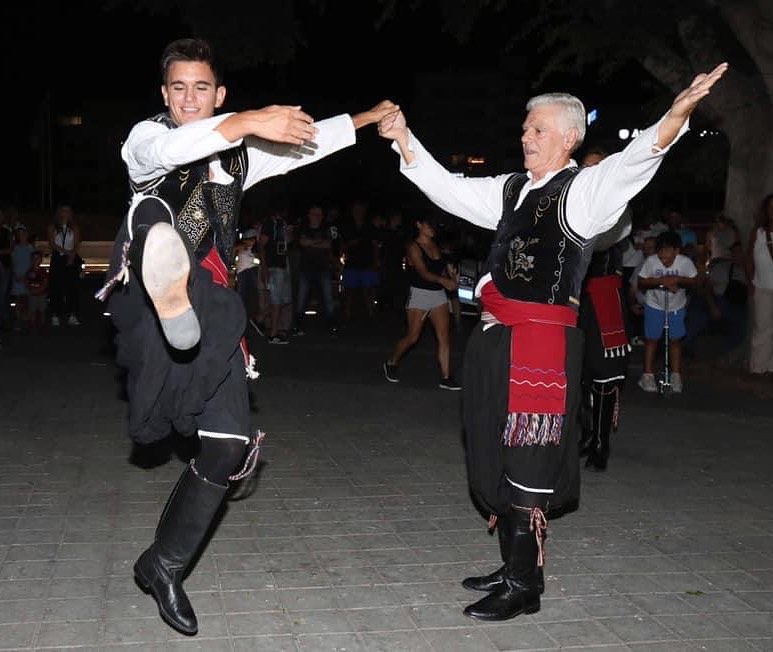
Central to the men's costume is the vraka, wide pleated trousers designed for movement during agricultural and village work. Over generations, they became a symbol of Cypriot masculinity.
Men wore a white cotton shirt topped with a sleeveless embroidered waistcoat (yileko). Around the waist, the long woven zonari added colour and offered back support.
Durable handmade leather boots known as stivania were crafted by village shoemakers for long distances and rugged terrain.
A black headscarf or cap completed the look, with more elaborate vests and polished boots reserved for festive occasions.